
Your cart is currently empty
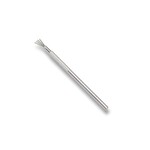
Multiple stiff wire bristles bent at an angle; an excellent tool for scoring to make attachments and creating surface textures faster and easier than with a single needle tool. The textured aluminum handle is easy to grip.
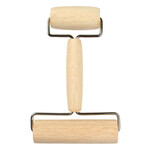
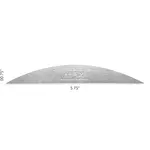
This is the tool you didn't know you were missing! The Hax Tool is exceptionally useful for the hand builder-- micro-fine teeth allow for detailed manicuring and finishing. Removes leather-hard clay with ease and also scores and blends wet surfaces.

Small Paddle socks are sold in pairs, sock colors vary. This set fits the Small Paddle, sold separately.
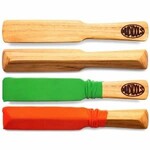
This is a favorite general-use paddle tool. Made from reclaimed local hardwood (sourced from dead and dying trees) that will give you a lifetime of use. This little guy works hard to join a seam, put a pleat in a tea bowl or deform a small pot.
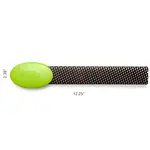
The Flat Shredder provides a long flat plane. Mudtools Shredders are indispensable tools for shaping and carving leather-hard clay.
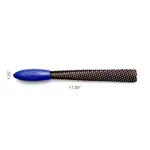
The Conical Shredder is indispensable for making longer strokes, and is good for texturing and working on rounded surfaces. Like the Small Shredder, it is also an indispensable tool for shaping and carving leather-hard clay.
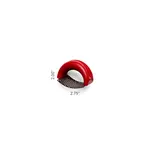
The Small Shredder is an indispensable tool for shaping and carving leather-hard clay.
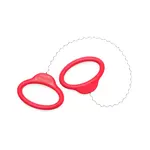
More than just a cut-off tool! As you pull it through the clay, the coiled wire leaves a unique pattern. Use it for faceting to achieve a surface that looks great on wood-fired or salt-fired pots and under glazes that break (like a celadon or temmoku).

Our Standard Green Mudwire is ergonomically designed to be a pleasure to use. The handle is made with a durable polymer and is shaped to give you a comfortable grip without having to wrap the wire around your fingers.
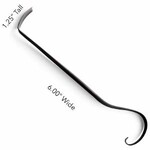
A Japanese-inspired, reimagined trim tool that-as the name implies, we truly think "does it all". No more switching between dozens of different trimming tools! It includes both a broad surface for smoothing and a tight shape for detail trimming.
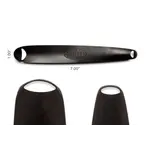
When Mudtools founder, Michael, visited potters in Japan, he observed that it was common for them to pull, rather than push, their carving tools through the clay. This dragging motion allowed for less friction and a fluid cut.